The decoration method is how your logo gets onto a product: stitched, printed, pressed or engraved. It affects how the finished item looks, how long it lasts, what it costs at different quantities and how quickly it can be made. Choosing the wrong method is one of the most common reasons branded clothing disappoints. This guide compares embroidery, screen printing, DTF and DTG printing, sublimation, pad printing and laser engraving so you can ask a supplier for the right thing.
The main methods at a glance
| Method | How it works | Best on | Strengths | Limits |
|---|---|---|---|---|
| Embroidery | Thread stitched into the fabric from a digitised design | Polos, workwear, caps, fleeces, bags | Hard-wearing, looks premium, survives industrial washing | Fine detail and small text are hard; not ideal on thin T-shirts |
| Screen printing | Ink pushed through a mesh screen, one screen per colour | T-shirts, hoodies, tote bags | Bright, durable colour; low unit cost on larger runs | Set-up per colour makes small runs and many colours expensive |
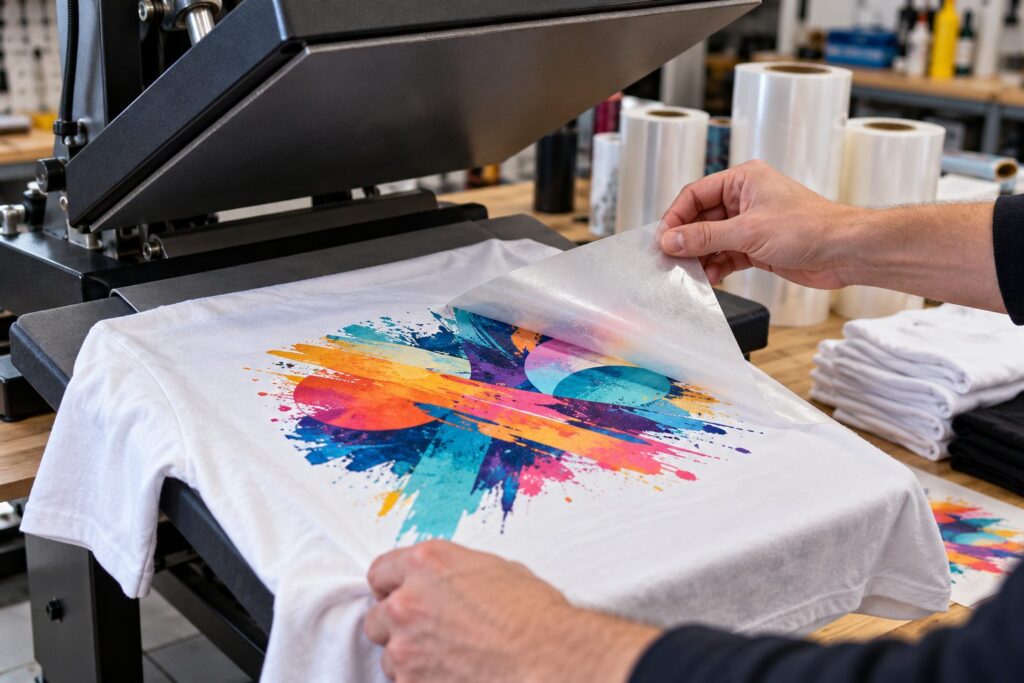
| DTF (direct to film) | Design printed onto film with adhesive powder, then heat-pressed on | Most fabrics including cotton, polyester and blends | Full colour with no screens; good for small runs and names | A printed layer sits on top of the fabric; feel varies by supplier |
| DTG (direct to garment) | Inkjet printing straight onto the garment | Cotton T-shirts and hoodies | Photographic detail; no set-up | Best on cotton; slower and dearer at volume |
| Sublimation | Dye turned to gas under heat so it bonds with polyester | White or light polyester garments, mugs, mouse mats, lanyards | All-over full colour that will not crack or peel | Needs polyester or coated items; not for dark cotton |
| Pad printing | A silicone pad transfers ink from an etched plate | Pens, small and curved hard items | Cheap and precise on small areas | Limited colours and print area |
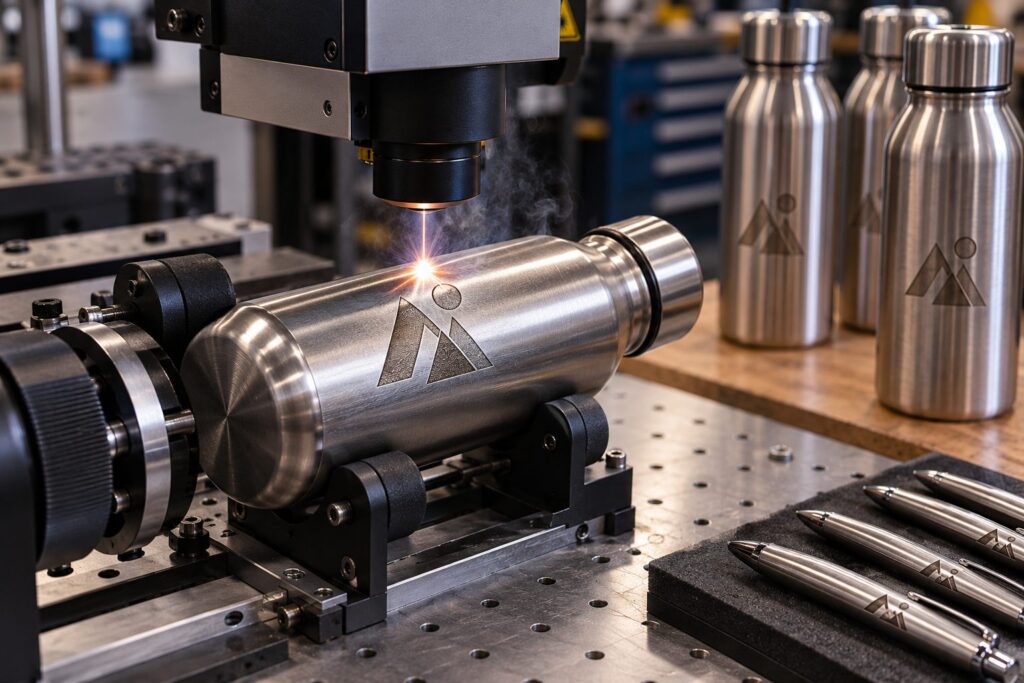
| Laser engraving | A laser marks or removes the surface | Metal bottles, pens, wood, glass | Permanent, no ink, looks premium | Single tone only; result depends on the material |
Embroidery for workwear and anything washed often
Embroidery is the standard choice for uniforms, workwear, polos, caps and fleeces because stitched logos survive repeated washing better than most prints. It also reads as higher quality, which is why it is common on corporate clothing and premium gifts.
Your logo has to be digitised first, which means a technician turns the artwork into a stitch file. Most suppliers charge for this once and keep the file for reorders, so ask whether the charge applies again later. The price of embroidery depends on the number of stitches, which grows with the size and fill of the logo rather than the number of colours. Very small text, gradients and thin lines do not stitch well, so a simplified version of the logo often works better. If you need embroidery services for a team, ask to see a stitched sample of your own logo before the full order.
Screen printing for larger runs of T-shirts and bags
Screen printing gives bright, solid colour and a soft, durable finish, and once the screens are made each extra item is cheap to print. That makes it the usual choice for event T-shirts, staff tees and tote bags in the hundreds. Each colour in the design needs its own screen, so a one or two colour logo is far cheaper to screen print than a full-colour photograph. Small runs are possible, but set-up costs spread over few items make the unit price high.
DTF and DTG printing for small runs and full colour
DTF printing has become popular because it handles full-colour designs on most fabrics without screens, so a run of ten costs about the same per item as a run of fifty. It is well suited to small teams, mixed garment types, personalised names and short deadlines. DTG prints straight onto the garment and gives fine photographic detail on cotton, but it is slower at volume. With both, ask how the print feels and how it holds up after washing, because quality depends heavily on the supplier’s equipment and materials.
Sublimation for polyester, mugs and lanyards
Sublimation printing dyes the material itself, so the design will not crack, peel or fade like a surface print. It is widely used for sportswear, teamwear, all-over printed polyester shirts, printed mugs, mouse mats and lanyards. It only works on polyester or specially coated items, and colours show best on white or light backgrounds.
Pad printing and laser engraving for hard goods
Pens, keyrings, USB sticks and other small hard items are usually pad printed, which transfers ink precisely onto curved or uneven surfaces. Metal bottles, pens and wooden items are often laser engraved instead, giving a permanent tone-on-tone mark that suits premium gifts. Debossing and embossing press the logo into leather, PU or paper, and are common on notebooks and luggage tags.
Which method fits your order
| Your situation | Usually the best fit |
|---|---|
| Workwear or uniforms washed at high temperatures | Embroidery |
| Caps and beanies | Embroidery |
| 200 or more event T-shirts with a one or two colour logo | Screen printing |
| Twenty T-shirts with a full-colour design | DTF or DTG |
| Individual names or numbers on each garment | DTF or vinyl transfer |
| Polyester sports kit with all-over design | Sublimation |
| Full-colour mugs, mouse mats or lanyards | Sublimation |
| Pens and small plastic items | Pad printing |
| Metal bottles and premium gifts | Laser engraving |
| Notebooks and leather or PU items | Debossing |
Questions to ask before you order
- Which method do you recommend for this product, quantity and design, and why?
- Are there set-up, screen or digitising charges, and do they apply to reorders?
- What is the largest and smallest logo size you can produce well on this item?
- Can I see a physical sample of my logo before the full run?
- How should the item be washed, and how long will the decoration last?
- Is the work done in-house or sent out to another decorator?
A good supplier will answer these easily, and many will advise against a method that would look poor on your design.
Finding a decorator
You can search for UK businesses by method in our embroidery, screen printing, DTF and DTG printing, sublimation printing, pad printing and laser engraving categories, or browse all decoration services. For garments, start with clothing and workwear. Many decorators work locally, so it is worth checking London, Manchester and Birmingham if you want to visit before you order. If the clothing is going into new starter boxes, see our guide to welcome packs and swag boxes.
Sources
This guide describes how each method works in general terms. Prices, minimums and lead times vary by supplier and change over time, so we do not quote them here. Check current terms directly with the business on its own website.