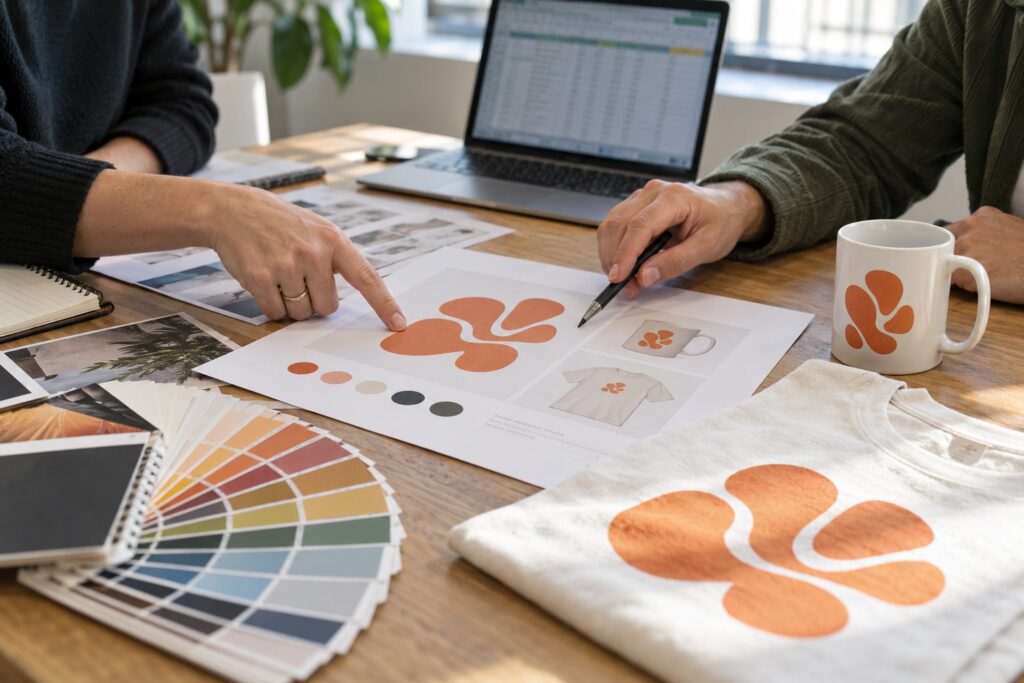
Promotional merchandise is any product branded with an organisation’s name or logo and given away or sold to promote it: pens, bags, mugs, clothing, notebooks, technology and much more. The most important part of buying it well is giving the supplier a clear brief. With a good brief you get accurate quotes and sensible suggestions, and there are fewer surprises at the proof stage. This guide explains what to put in a brief, how artwork and proofs work, what affects minimum orders and lead times, and how to compare the replies you get.
What to include in your brief
Suppliers can only quote for what they are told. A short written brief, even half a page, saves several rounds of emails and makes quotes from different suppliers comparable.
| Heading | What to tell the supplier |
|---|---|
| Purpose | What the items are for and who will receive them, for example exhibition visitors, new staff or key clients |
| Products | The product types you have in mind, or the problem you want solved if you are open to ideas |
| Quantity | The number you need, and whether you might order more later |
| Budget | A budget per item or in total, and whether it includes delivery |
| Branding | Logo, colours, any wording, and where you want it on the product |
| Deadline | The date the goods must arrive, the delivery address and any delivery restrictions |
| Standards | Any requirements on sustainability, UK manufacture, safety or accessibility |
| Extras | Packing, individual personalisation, storage or delivery to several addresses |
Artwork that suppliers can use
Artwork is the most common cause of delay. Suppliers need your logo as a vector file, usually AI, EPS, SVG or a PDF saved from a design program with the vector paths intact. A logo copied from a website or pasted into a Word document is normally too low in resolution and has to be redrawn, which costs time and sometimes money.
Give your brand colours as Pantone references where you have them, because print colours on fabric, plastic and metal are matched to Pantone rather than to what you see on screen. Let the supplier know if there is a simplified or one-colour version of your logo, as small print areas on pens or lanyards may not reproduce fine detail.
| File | Usually suitable? | Notes |
|---|---|---|
| AI, EPS or SVG | Yes | Vector formats that scale without losing quality |
| PDF from a design program | Usually | Fine if the logo inside is vector, not a pasted image |
| High-resolution PNG or TIFF | Sometimes | Can work for full-colour digital print or DTF at the right size |
| JPG from a website or email signature | Rarely | Usually too small and may need redrawing |
| Logo inside a Word or PowerPoint file | No | Ask your designer for the original files |
Proofs and samples
Before production, a supplier sends a proof, normally a digital visual showing your logo on the product with its size, position and colours. Check every detail: spelling, colour references, logo size, the product colour and the quantity. Once you approve a proof, mistakes you missed are usually your cost, not theirs.
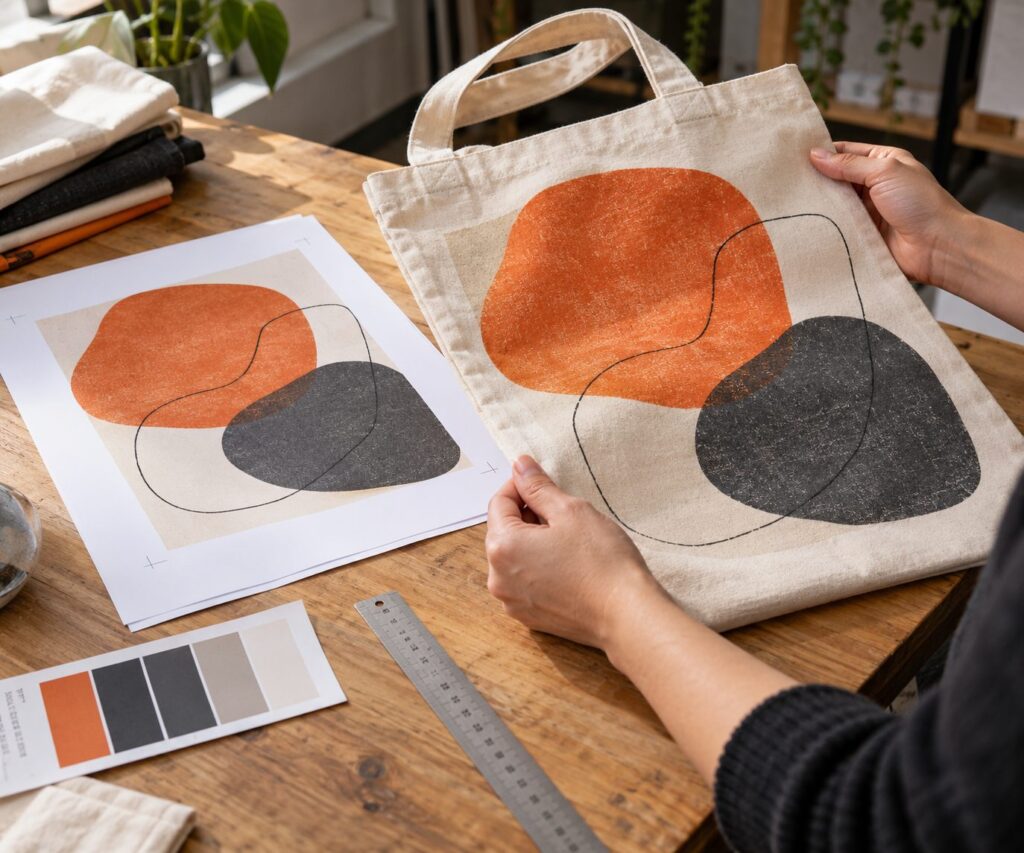
For a large order or a product you have not bought before, ask for a sample. A plain sample shows the quality of the item itself. A pre-production sample, branded with your logo, shows what the finished product will look like. Samples can add time and sometimes cost, so ask early.
Minimum orders and quantities
Minimum order quantities exist because many branding methods have a set-up cost, such as making screens, plates or embroidery files, that has to be spread across the order. That is why ten printed mugs cost much more each than 250. Some products and methods, such as DTF printing on clothing or digital print on mugs, have low or no minimums, and many suppliers keep a range for small quantities. If you need a small run, say so in the brief and ask which products suit it.
Look at the price breaks. If 250 units cost little more in total than 200, it may be worth ordering more, provided you have a use for the extra stock.
Lead times
A lead time usually starts when you approve the proof, not when you first ask for a quote. Production times vary by product and branding method, and items made to your specification or shipped from overseas take longer. Express services exist for stock products with simple branding, often at a higher price. Peak times, especially before Christmas and in the main exhibition months, can add time.
Always give the date the goods must arrive and ask the supplier to confirm it in writing. If the deadline is fixed, such as an exhibition build day, tell them so.
Comparing quotes and choosing a supplier
When quotes come back, compare the total delivered cost for the same product, quantity and branding, including set-up charges, artwork fees, delivery and VAT. Then look beyond price. Did the supplier ask sensible questions? Did they suggest a better product or method, or warn you about a problem with your artwork? Are they clear about lead times and what happens if something goes wrong?
It is reasonable to check a supplier’s own website for a business address and contact details, read independent reviews, and ask whether they are members of a trade body such as the BPMA, which runs a public directory of its distributor members. For eco or UK-made claims, ask for evidence, as explained in our guide to eco-friendly promotional products.
Find a supplier
You can search UK promotional merchandise suppliers by product type from our supplier directory, or by location, starting with London, Birmingham and Manchester. If you need help with the creative side, browse merchandise agencies and suppliers offering design and artwork. For clothing, read our guide to choosing a decoration method before you write the brief.
Sources
- British Promotional Merchandise Association, Distributor Directory, checked 26 October 2026.